
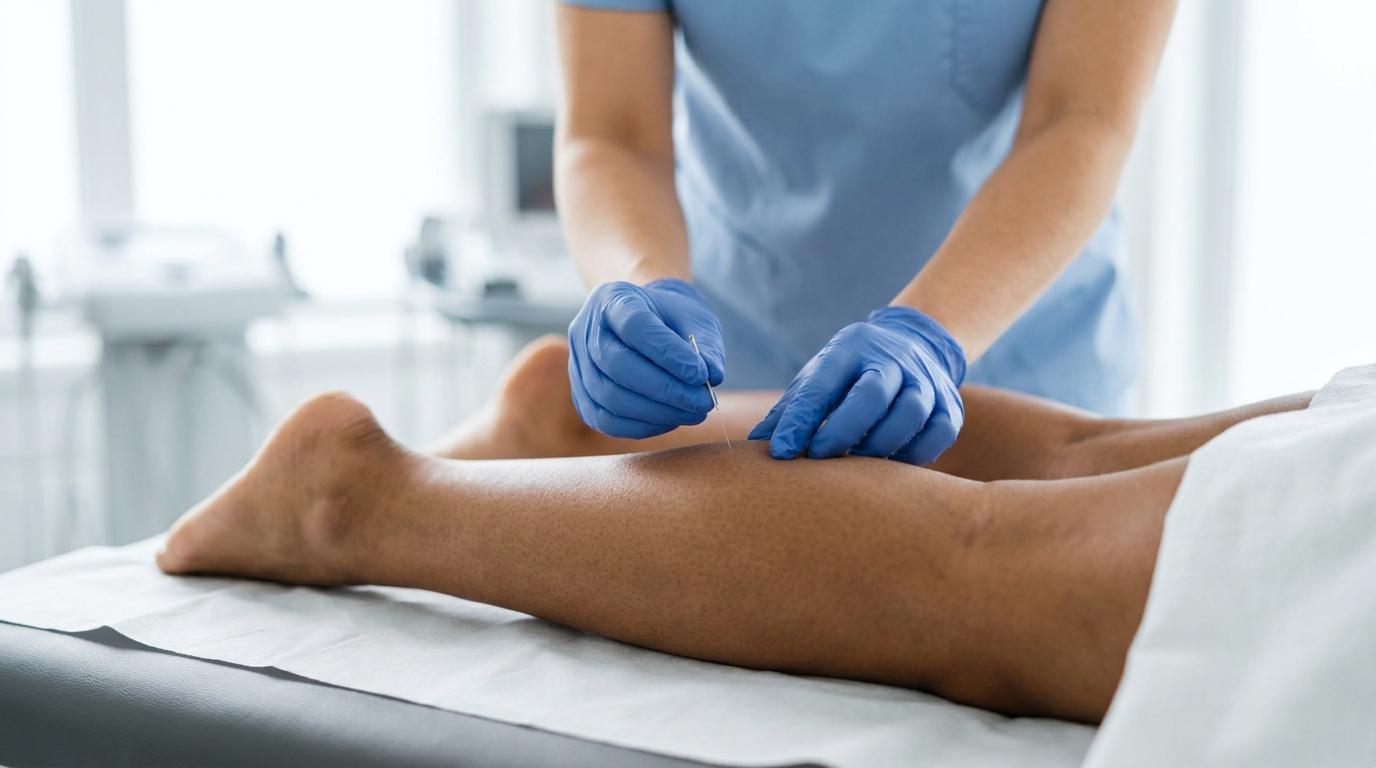
What dry needling is
Dry needling is a treatment that uses very thin, sterile, single-use needles to reach tight, irritable spots inside a muscle. These spots are often called trigger points, and they can feel like small knots that ache, refer pain to other areas, or limit how freely you move. The word “dry” simply means the needle does not inject any medication or fluid. The needle itself is the tool.
At Apex Health Acupuncture and Chiropractic, dry needling is performed by trained, licensed providers as one part of a broader plan that may also include hands-on care and targeted movement guidance. It is often used alongside chiropractic care and massage therapy when muscle tension is a major driver of a person’s symptoms.
Dry needling versus acupuncture
People often ask whether dry needling is the same as acupuncture. The needles look similar, but the reasoning behind them is different. Acupuncture is rooted in traditional Chinese medicine and follows a system of points and channels. Dry needling is based on Western anatomy and focuses specifically on muscle trigger points and the surrounding soft tissue. They can both be useful, but they are distinct approaches with different training paths.
How it works
When a needle is placed into a trigger point, it can prompt a brief, involuntary twitch in the muscle. Many providers consider this local twitch response a sign that the right spot has been reached. The leading theory is that this stimulation helps the overactive muscle fibers relax, improves local blood flow, and changes how the nervous system processes pain in that area.
It is worth being honest about the strength of the evidence. Research generally supports dry needling for short-term relief of pain and disability in certain conditions, especially neck and shoulder pain linked to trigger points. However, the quality of studies varies, and dry needling has not been proven superior to every other treatment for every problem. It tends to work best as part of a combined plan rather than as a stand-alone cure.
Conditions it can help
Dry needling is most useful when muscle tightness and trigger points are part of the picture. Providers at Apex Health may consider it for:
- Neck pain tied to tight upper-back and shoulder muscles
- Lower back pain with muscular guarding and stiffness
- Frozen shoulder and related shoulder restriction
- Rotator cuff injury where surrounding muscles are overworked
- TMJ discomfort connected to jaw and facial muscle tension
Your provider will decide whether dry needling fits your situation after a proper assessment, rather than applying it to every complaint.
What to expect, step by step
A first dry needling session is usually straightforward:
1. Conversation and exam. Your provider asks about your symptoms, history, and goals, then examines the area to locate the muscles and trigger points involved.
2. Positioning. You lie or sit so the target muscle is relaxed and easy to reach. The skin is cleaned.
3. Needle placement. One or more thin needles are inserted through the skin into the muscle. You may feel a small prick, a dull ache, or a quick twitch.
4. Brief stimulation. The provider may gently move a needle or leave it in place for a short time, depending on the goal.
5. Removal and aftercare. The needles are removed and disposed of safely. You may receive simple guidance on movement, hydration, or gentle stretching afterward.
Sessions are typically short, and the number you need depends on your response and the nature of the problem.
Does it hurt, and what are the side effects
Most people tolerate dry needling well. The initial prick is usually mild, and the muscle twitch can feel like a quick cramp that passes within seconds. Some people find it briefly uncomfortable, while others barely notice it.
After treatment, the most common side effects are temporary and minor:
- Muscle soreness, similar to how you feel after a hard workout, lasting a day or two
- Mild bruising or a small spot of bleeding at a needle site
- Brief tiredness or lightheadedness
Serious complications are uncommon when treatment is performed by a trained provider using single-use sterile needles. The most important safety consideration is anatomy near the chest, where careful technique is required. Our providers are trained to needle these regions safely.
Who should avoid it or use caution
Dry needling is not appropriate for everyone. Tell your provider before treatment if any of the following apply, as they may change the plan or rule it out:
- You take blood thinners or have a bleeding disorder
- You have a strong fear of needles that causes fainting
- You are pregnant (some areas are avoided, especially in early pregnancy)
- You have an active skin infection, open wound, or rash over the target area
- You have a compromised immune system or a condition affecting healing
- You have a metal allergy, lymphedema in the area, or certain implanted devices
When dry needling is not a good fit, your provider can suggest alternatives such as massage therapy, active release technique, or other soft-tissue methods. The goal is always to match the treatment to the person, not the other way around.
Book an appointment in NYC
- Midtown — 280 Madison Ave, Suite 800 · (212) 242-3210
- Downtown — 217 Broadway, Ste. 512 · (347) 213-7035
- Chelsea — 37 West 20th St, Ste 1010 · (646) 935-9284
This page is for general information and is not a substitute for personalized medical advice, diagnosis, or treatment.
Frequently asked questions
Is dry needling the same as acupuncture?
No. They use similar needles, but acupuncture follows traditional Chinese medicine points and channels, while dry needling is based on Western anatomy and targets muscle trigger points. They are separate approaches with different training.
How many sessions will I need?
It varies. Some people notice a change within a few sessions, while others with longer-standing problems need more. Your provider will set expectations after assessing how your muscles respond.
Will I be sore afterward?
Possibly. Mild soreness like a post-workout ache is common for a day or two, sometimes with minor bruising. This usually settles on its own.
Is dry needling safe?
When performed by a trained, licensed provider with single-use sterile needles, it is generally safe. The main risks are minor, such as soreness or small bruises. Always share your full health history first.
Does dry needling actually work?
Evidence supports short-term relief for some conditions, especially trigger-point-related neck and shoulder pain. It is not a guaranteed cure for everyone and tends to work best combined with other care.
Can I exercise after a session?
Light movement is usually fine and often encouraged. Your provider may advise easing off intense training for a day if the treated muscle is sore.
Who should not have dry needling?
People on blood thinners, those with bleeding disorders, certain pregnant patients, anyone with an infection over the area, and those with a severe needle phobia should discuss alternatives with their provider first.