
What stretch therapy is
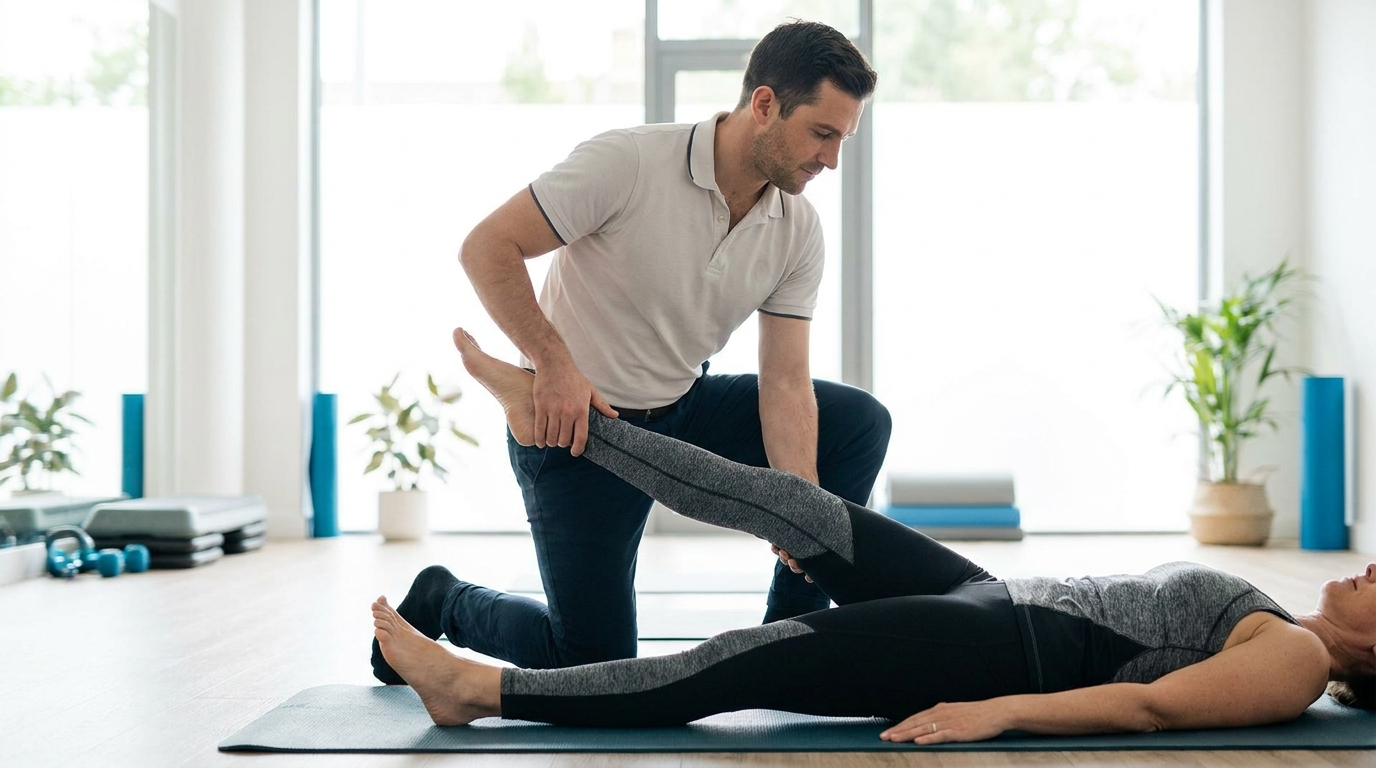
Stretch therapy is guided, hands-on stretching delivered by a trained provider to help your joints and muscles move more freely. Instead of stretching on your own and guessing at depth or position, you relax while our provider moves a limb or body region through a controlled range, holding and progressing each stretch with feedback from you. At Apex Health Acupuncture and Chiropractic, our licensed providers use assisted stretching to ease tight muscles, improve mobility, and complement other treatments.
Sessions are built around your body. We focus on the areas that feel restricted, such as the hips, hamstrings, shoulders, or neck, and we progress slowly so each stretch stays within a comfortable range. The aim is steady, sustainable gains in how you move, not a single dramatic stretch.
How it works (and what the evidence says)
A muscle that is habitually tight can limit how far a joint moves and leave the area feeling stiff. Stretching applies a gentle, sustained lengthening to the muscle and the tissue around it. Done regularly, it can improve flexibility and reduce the sense of stiffness, which often makes everyday movement feel easier.
Here is the honest version. Research consistently shows that both occasional and regular stretching can improve joint range of motion, and that regular stretching reduces muscle stiffness over time. How much you gain depends on factors like the technique, how long and how intensely you stretch, and which muscle is being worked. The evidence is clearer for improving flexibility than for treating pain directly, so we use stretch therapy primarily to restore movement and support your other care, and we are upfront that it is a complement, not a cure for an underlying injury.
Conditions it can help
Stretch therapy is most useful where tightness and limited mobility are part of the picture. At Apex Health it commonly supports people dealing with:
It works well alongside our chiropractic care and massage therapy services, where loosening tight tissue can make joint and soft-tissue work more effective.
What to expect, step by step
A stretch therapy session is calm, communicative, and paced to you.
- Quick check-in. We ask what feels tight or restricted, your activity level, and any injuries or medical history that affect stretching.
- Movement screen. Our provider observes how a few key areas move to find the best places to start.
- Plan. We explain which areas we will work on and roughly how the session will flow.
- Assisted stretching. You lie or sit comfortably, often on a treatment table, while our provider supports and moves the limb or region through a controlled stretch. We hold each position and check in on the sensation.
- Progression and home tips. We may gradually deepen a stretch as the muscle relaxes, then finish with simple stretches you can do at home to keep the gains.
Sessions are typically slow and steady, with stretching performed in a controlled manner to reduce the risk of strain.
Does it hurt, and are there side effects?
Stretch therapy should feel like a comfortable pull, not pain. You may feel a stretch sensation that is mild to moderate, and it should ease as the muscle relaxes. Sharp, pinching, or radiating pain is a signal to stop, and we ask you to speak up the moment a stretch feels like too much. Communication is what keeps it safe and effective.
Side effects are usually minimal. Some people feel mild soreness afterward, similar to the feeling after light exercise, which settles within a day or two. Because the stretching is controlled and guided, the risk of injury is low when it stays within your range.
Who should avoid or postpone it
Stretch therapy is gentle, but some situations call for caution or clearance first. Tell us in advance if any of these apply:
- A recent fracture, sprain, strain, or unstable injury in the area.
- A recent surgery or any movement restriction your doctor has set.
- Severe osteoporosis or fragile bones.
- Acute inflammation, swelling, or a flare of an inflammatory joint condition.
- A known joint instability or hypermobility disorder, where extra range can do harm.
- Numbness, tingling, or weakness in a limb, which should be evaluated before stretching.
If a stretch ever reproduces your pain or causes new symptoms, we stop and reassess. Our providers would rather slow down or change the plan than force a range your body is not ready for, and we will tell you honestly when another treatment should come first.
Book an appointment in NYC
- Midtown — 280 Madison Ave, Suite 800 · (212) 242-3210
- Downtown — 217 Broadway, Ste. 512 · (347) 213-7035
- Chelsea — 37 West 20th St, Ste 1010 · (646) 935-9284
This page is for general information and is not a substitute for personalized medical advice, diagnosis, or treatment.
Frequently asked questions
How is stretch therapy different from stretching on my own?
A trained provider controls the position, depth, and timing, and adjusts based on your feedback. That lets you relax fully and often reach a safer, more effective stretch than you would alone.
Will it improve my flexibility quickly?
You may notice a little more ease right after a session, but lasting flexibility gains come from regular stretching over time. We will suggest home stretches to support the progress.
Does stretch therapy treat the cause of my pain?
Not directly. It restores movement and eases tightness, which can help you feel better, but it works best as a complement to care that addresses the underlying issue.
Is it safe if I am not very fit or flexible?
Yes, when it is matched to your current range. We start gently and progress slowly, so you do not need to be flexible to begin.
Will I be sore afterward?
You might feel mild soreness, much like after light exercise. It usually fades within a day or two. Let us know if it feels stronger than expected.
How often should I come in?
It depends on your goals and how your body responds. We reassess as we go and recommend a cadence that keeps you progressing without overdoing it.