
What medical massage is
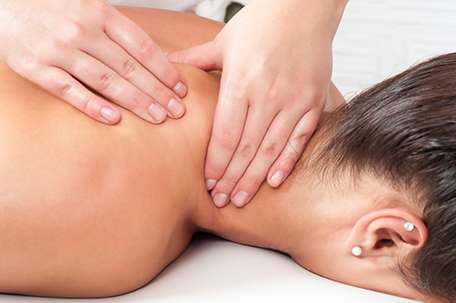
Medical massage is hands-on soft-tissue therapy with a clinical goal. Rather than a general relaxation rubdown, each session at Apex Health Acupuncture and Chiropractic targets a specific problem area: a tight, painful muscle group, a movement restriction, or recovery from a strain or overuse injury. Our licensed providers adjust pressure, pace, and technique to match your body and your reason for coming in.
The work draws on several recognized approaches, including deep-tissue massage, trigger-point release, and broad soft-tissue strokes that warm and lengthen muscle. The thread connecting them is intent. Medical massage is planned around your assessment and reassessed over time, so the treatment evolves as you do.
How it works (and what the evidence says)
When a muscle is overworked or guarded, it can develop tight bands and tender spots that limit how freely a joint moves. Manual pressure and movement aim to ease that tension, encourage local circulation, and help the tissue relax so you can move more comfortably.
We want to be straight with you about the evidence. Research suggests massage therapy may help relieve several kinds of pain, but for most conditions the evidence is not strong, and the relief is often short-term. Reviews from the National Center for Complementary and Integrative Health note that massage may be useful for low-back pain and chronic neck pain, and that a weekly session can give short-term benefit for knee osteoarthritis. The exact mechanisms are still not fully understood. That is why we treat medical massage as one supportive part of a plan, often alongside acupuncture or chiropractic care, rather than a standalone cure.
Conditions it can help
Medical massage is most useful for muscular and soft-tissue complaints. At Apex Health it is frequently used to support people dealing with:
It pairs naturally with our other massage therapy services and with chiropractic care when joint and muscle issues overlap.
What to expect, step by step
A first medical massage visit is structured, not improvised.
- Brief intake. We ask where it hurts, what makes it better or worse, your activity level, and any medical history that affects treatment.
- Assessment. Our provider checks the area, looking at range of motion and feeling for tight or tender tissue.
- Treatment plan. We explain the techniques we intend to use and the pressure range, and we set expectations for the session.
- The massage. You lie on a treatment table, usually face up or face down, draped for comfort and privacy. Our provider works the target area and surrounding tissue, checking in on pressure as they go.
- Aftercare. We may suggest gentle movement, hydration, or simple home stretches, and we discuss whether follow-up sessions make sense.
Sessions commonly run 30 to 60 minutes depending on the area and goal.
Does it hurt, and are there side effects?
Medical massage should not be painful in a sharp or alarming way. Deep-tissue and trigger-point work can feel intense at moments, and you may notice a “good hurt” as a tight spot releases. That sensation should stay within your comfort, and you can ask us to lighten up at any point. Pressure is a dial we adjust to you, not a test you have to pass.
Massage therapy has few risks when performed by a trained practitioner. The most common after-effects are mild and temporary: short-lived soreness, slight tenderness in the treated area, or feeling tired for the rest of the day. Drinking water and resting usually settles this within a day or two.
Who should avoid or postpone it
Medical massage is not right for everyone, and a few situations call for caution or a doctor’s clearance first. Tell us in advance, and avoid or delay treatment, if any of the following apply:
- A blood clot, deep vein thrombosis, or a bleeding or clotting disorder.
- You take blood thinners or bruise very easily.
- An open wound, active skin infection, rash, or burn over the area.
- A recent fracture, severe osteoporosis, or unstable injury in the region.
- Active cancer or recent surgery, where massage may need oncology or surgical sign-off.
- Fever or an acute infection.
- Pregnancy, which calls for trained, pregnancy-appropriate technique and positioning.
If you are unsure, ask. Our providers would rather adjust the plan than push into territory that is not safe for you. Medical massage works best as part of a broader, honestly-scoped approach to feeling and moving better, and we will tell you plainly when another treatment is a better fit.
Book an appointment in NYC
- Midtown — 280 Madison Ave, Suite 800 · (212) 242-3210
- Downtown — 217 Broadway, Ste. 512 · (347) 213-7035
- Chelsea — 37 West 20th St, Ste 1010 · (646) 935-9284
This page is for general information and is not a substitute for personalized medical advice, diagnosis, or treatment.
Frequently asked questions
How is medical massage different from a spa massage?
A spa massage is built around relaxation. Medical massage is built around a specific clinical goal, such as easing a painful muscle or restoring movement, and it follows an assessment and a plan that we revisit over time.
How many sessions will I need?
It depends on the issue. Some people feel meaningful relief after one or two sessions, while ongoing or recurring problems may benefit from a short course. We reassess as we go and will not recommend visits you do not need.
Will the soreness afterward be bad?
Usually not. Mild, short-lived soreness or tenderness is the most common after-effect, similar to how muscles feel after gentle exercise. It typically settles within a day or two.
Can medical massage replace my other treatments?
No. We view it as a supportive therapy that works best alongside care such as acupuncture or chiropractic, not as a replacement for medical treatment your doctor has prescribed.
Is medical massage safe during pregnancy?
It can be, but it requires pregnancy-appropriate technique and positioning. Let us know you are pregnant when you book so we can plan the session safely, and check with your doctor if you have any pregnancy complications.
How long does a session last?
Most sessions run 30 to 60 minutes, depending on the area being treated and your goals for the visit.