
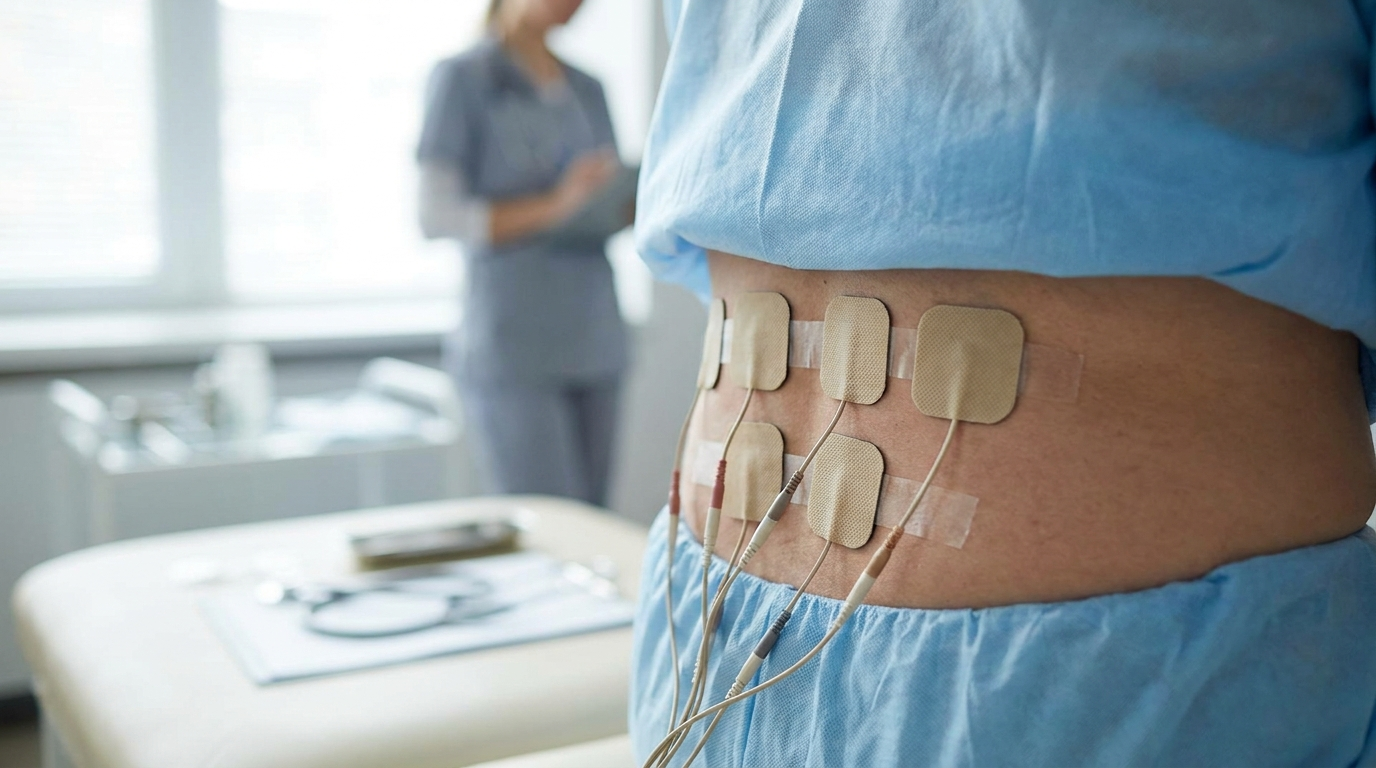
What electric stimulation is
Electric stimulation, often shortened to e-stim, uses gentle electrical pulses delivered through small pads placed on the skin to influence how nerves and muscles behave. At Apex Health Acupuncture and Chiropractic, our licensed providers use it as a supportive tool for pain relief and muscle activation, layered into a broader treatment plan rather than used on its own.
The most familiar form for pain is transcutaneous electrical nerve stimulation, or TENS, which targets nerves to dampen pain signals. A related approach stimulates the muscle itself to encourage it to contract. Both feel like a buzzing, tingling, or light tapping sensation on the skin. Nothing breaks the skin, and you stay in control of the intensity throughout.
How it works (and what the evidence says)
The idea behind e-stim for pain is straightforward. Electrical pulses stimulate nerve fibers in a way that appears to reduce the activity of the nerve cells that carry pain signals toward the spinal cord and brain. In plainer terms, the gentle current gives your nervous system something else to pay attention to, which can turn down the volume on pain while the pads are on and for a window afterward.
Here is the honest picture from the research. Electric stimulation may help with a range of acute and chronic pain conditions, but the size of the effect is uncertain because many studies have been small or of mixed quality. Large pooled analyses have found lower pain in people with chronic musculoskeletal pain, yet broad overviews caution that the evidence is not strong enough to promise relief for everyone. Dose matters too: research suggests that an adequate intensity is important for getting a benefit. We treat e-stim as a low-risk option worth trying as part of your plan, not a guaranteed fix.
Conditions it can help
E-stim is most often used to ease musculoskeletal pain and support muscle function. At Apex Health it is commonly part of care for:
It frequently complements chiropractic care and our acupuncture services, where calming a painful area first can make the rest of the session more productive.
What to expect, step by step
An e-stim session is quick and comfortable.
1. Quick review. We confirm where you are hurting, your medical history, and that e-stim is appropriate for you.
2. Pad placement. Our provider places small adhesive electrode pads on the skin around the target area.
3. Dialing in. We slowly increase the intensity until you feel a comfortable tingling or tapping. You should never feel pain from the current itself.
4. Treatment time. You relax while the unit runs, usually for around 10 to 20 minutes. We check in on how the sensation feels.
5. Wrap-up. We remove the pads, check the skin, and discuss how the area feels and whether to repeat it.
You stay clothed apart from exposing the treatment area, and you can ask us to lower the intensity or stop at any time.
Does it hurt, and are there side effects?
E-stim should not hurt. The sensation is a buzzing or tingling that most people find tolerable and even pleasant. If it ever feels sharp or uncomfortable, tell us and we will turn it down.
Side effects are generally minor. The most common are mild redness or itchiness where the pads sat, which fades on its own. Because pad placement and intensity are adjusted to you, the risk is low when the treatment is supervised by a trained provider. We will keep the current within a comfortable range and check your skin before and after.
Who should avoid or postpone it
E-stim is not safe for everyone, and a few situations rule it out or require a doctor’s clearance. Tell us in advance if any of these apply:
- You have a pacemaker, implanted defibrillator, or other implanted electronic device.
- You are pregnant, where placement near the abdomen or low back must be avoided or cleared first.
- You have epilepsy or a seizure disorder.
- The area has broken skin, an open wound, an active infection, or a rash.
- You have reduced sensation in the area, so you cannot reliably feel the intensity.
- You have a known heart rhythm problem, deep vein thrombosis, or cancer in the treatment area.
Pads are never placed over the front of the neck, the eyes, or directly over the heart. If you are unsure whether e-stim is right for you, ask. Our providers would rather adjust the plan than apply a treatment that is not safe for your situation, and we will tell you honestly when another approach is the better choice.
Book an appointment in NYC
- Midtown — 280 Madison Ave, Suite 800 · (212) 242-3210
- Downtown — 217 Broadway, Ste. 512 · (347) 213-7035
- Chelsea — 37 West 20th St, Ste 1010 · (646) 935-9284
This page is for general information and is not a substitute for personalized medical advice, diagnosis, or treatment.
Frequently asked questions
Will the electricity shock or hurt me?
No. E-stim feels like a buzzing or tingling sensation, not a shock. You control the intensity together with your provider, and it should always stay comfortable.
How long before I feel relief?
Many people notice some easing of pain during the session and for a period afterward. The effect is often short-term, which is why e-stim is used as part of a wider plan rather than alone.
Is e-stim the same as acupuncture?
No. E-stim uses adhesive pads on the skin to deliver electrical pulses. It is a separate treatment, though it can be combined thoughtfully with other care during a visit.
Can I use a home TENS unit instead?
Some people do, but supervised e-stim lets a trained provider place the pads correctly, set an appropriate intensity, and confirm it is safe for your condition. Ask us before relying on a home device.
How many sessions will I need?
It varies with the condition and how you respond. We reassess as we go and only continue e-stim while it is helping.
Can I have e-stim if I have a pacemaker?
No. E-stim is not used in people with a pacemaker or other implanted electronic device. Let us know about any implant so we can choose a safe alternative.