
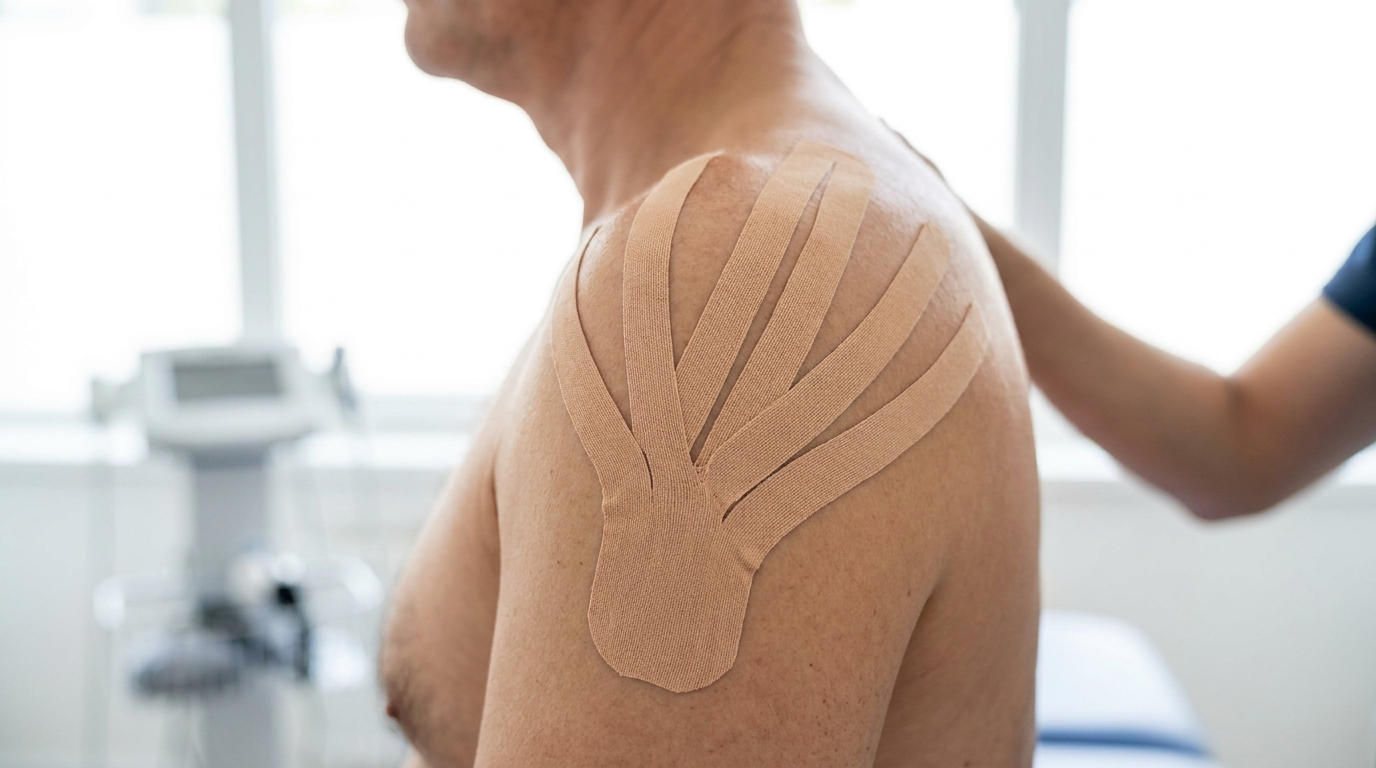
What kinesiology taping is
Kinesiology taping is the application of thin, stretchy, fabric tape to the skin over a muscle or joint. Unlike rigid athletic tape, this tape flexes and moves with your body, so it can be worn during daily activity, work, or exercise. You have likely seen it in bright colors on athletes, but it is used for everyday aches and recovery too, not only for sports.
At Apex Health Acupuncture and Chiropractic, kinesiology taping is used as a supportive add-on rather than a treatment on its own. Providers typically apply it to extend the benefit of an in-office session, pairing it with chiropractic care, massage therapy, or guided movement so the tape supports the active part of your recovery between visits.
How it works
The tape is applied with varying amounts of stretch and in different patterns depending on the goal. The common theories are that it gently lifts the skin to influence circulation and fluid drainage in the area, that it provides light support to a muscle or joint without restricting movement, and that the feel of the tape on the skin gives the nervous system feedback that may ease the perception of pain or improve awareness of how you are moving.
Here is the honest picture. The evidence for kinesiology taping is mixed. Some studies suggest it may offer modest, short-term pain relief, particularly compared with doing nothing, and some people report feeling more supported. However, high-quality research is limited, and the tape has generally not proven superior to established treatments. We are upfront that taping is a low-cost, low-risk helper, not a stand-alone solution, and we use it to complement care rather than replace it.
Conditions it may help
Kinesiology taping is most often used as a supportive layer for muscle and joint complaints. Providers at Apex Health may apply it as part of a plan for:
- Neck pain and shoulder tension
- Lower back pain and general back pain
- Plantar fasciitis and foot or arch discomfort
- Rotator cuff injury and shoulder support during recovery
Because the benefit is modest and varies from person to person, your provider will be honest about whether taping is likely to add value for your specific situation.
What to expect, step by step
Applying kinesiology tape is quick, simple, and painless:
1. Assessment. Your provider identifies the muscle or joint to support and the goal of the taping.
2. Skin preparation. The area is cleaned and dried, and excess hair may be trimmed so the tape adheres well.
3. Application. The tape is cut to shape and applied along the muscle or around the joint, using the right amount of stretch for the intended effect.
4. Smoothing. The provider rubs the tape to activate the adhesive so it bonds to the skin.
5. Wear time. You can usually leave the tape on for several days, including through showers and activity, until it loosens or your provider advises removal.
There is no downtime, and you can return to your normal routine immediately.
Does it hurt, and what are the side effects
Kinesiology taping itself does not hurt. Application is painless, and most people forget the tape is there once it is on. The main thing people notice is the light, supportive feel of the tape against the skin.
Side effects are uncommon and usually relate to the skin. Some people experience mild irritation, redness, or itching where the tape sits, and a small number react to the adhesive. Removing the tape slowly, ideally when the skin is damp, helps avoid irritation. If you notice a rash, blistering, or significant itching, remove the tape and let your provider know.
Who should avoid it or use caution
Kinesiology taping is gentle, but it is not right for every skin or situation. Let your provider know if any of the following apply:
- You have an allergy to adhesives or have reacted to tape before
- You have fragile, thin, or easily damaged skin
- You have an open wound, rash, sunburn, infection, or healing scar over the area
- You have a known sensitivity that causes skin breakdown
- You are pregnant (some applications over the abdomen or lower back are avoided)
- You have circulation problems, lymphedema, or a blood clot in the area without provider guidance
If taping is not suitable, your provider can offer other supportive options as part of your plan, such as stretch therapy, massage therapy, or a posture assessment. The tape is one small tool among many, chosen only when it genuinely helps.
Book an appointment in NYC
- Midtown — 280 Madison Ave, Suite 800 · (212) 242-3210
- Downtown — 217 Broadway, Ste. 512 · (347) 213-7035
- Chelsea — 37 West 20th St, Ste 1010 · (646) 935-9284
This page is for general information and is not a substitute for personalized medical advice, diagnosis, or treatment.
Frequently asked questions
Does kinesiology tape really work?
The evidence is mixed. Some studies show modest, short-term pain relief, especially compared with no treatment, but it is not clearly better than established care. We use it as a low-risk supportive add-on, not a cure.
Does applying the tape hurt?
No. Application is painless, and most people barely notice the tape once it is on, aside from a light supportive feeling.
How long can I leave the tape on?
Typically several days, including through showers and activity, until it starts to loosen or your provider advises removing it.
Will the tape irritate my skin?
Most people tolerate it well, but mild redness, itching, or irritation can occur, and a few people react to the adhesive. Remove it if you notice a rash or significant itching.
Can I shower and exercise with the tape on?
Yes. The tape is water resistant and flexible, so it is designed to stay on through daily activity, workouts, and showers.
Is kinesiology taping only for athletes?
No. While athletes use it often, it is also applied for everyday muscle and joint complaints and for support during recovery.
Who should avoid kinesiology tape?
People with adhesive allergies, fragile skin, open wounds or infections over the area, and certain circulation conditions should check with their provider before taping.
Resources
- Effect of Kinesiology Taping on Pain in Musculoskeletal Injuries: Systematic Review and Meta-Analysis
- Kinesio Taping in Musculoskeletal Pain Lasting More Than 4 Weeks: Systematic Review with Meta-Analysis
- A Systematic Review of the Effectiveness of Kinesio Taping for Musculoskeletal Injury
- Taping for Conditions of the Musculoskeletal System: An Evidence Map Review